by Alan Morton
‘But there have always been changes in global temperatures … surely global warming is just another natural fluctuation …?’
Dive into Alan’s fascinating and accessible explanation of the manmade causes of climate change, the science behind the effects and the urgency for international action …
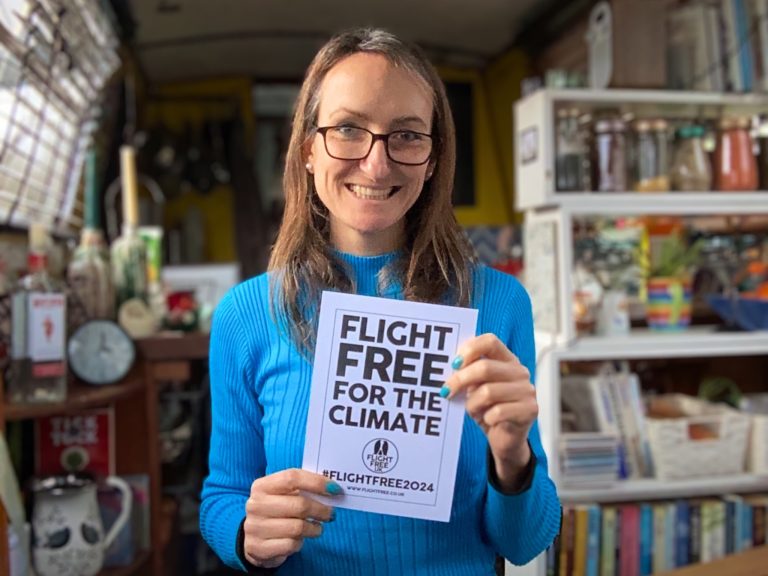
Alan Morton is one of the founder members of MHSG and en10ergy limited. His interest in energy and climate issues is long-standing from his upbringing in a coal-mining area in Fife, Scotland, to being Curator of Energy and Modern Physics at the Science Museum for many years. The PV panels in the background of his picture played a part in setting up MHSG.

Over the millennia there have been long cycles of naturally occurring climate change, from cold to warm. The ice cores from Antarctica are evidence of that. However we are at a warm peak of a cycle and the world climate should be cooling, but it is not.
Why is that happening? The main reason is that carbon dioxide (CO2) (and other Green House Gas) concentrations in the atmosphere are rising. CO2 from 280 parts per million in pre-industrial times to over 420 ppm now. That is 0.04% of the gases in the atmosphere, a tiny amount, but of great significance. Because CO2 traps heat, unlike the oxygen and nitrogen which make up the vast bulk of our atmosphere.
Incoming light from the Sun is absorbed by the land, sea, vegetation etc and heats up slightly. In turn all these radiate heat – infrared light – back out. Some of this goes to outer space but some is trapped by the CO2 and the atmosphere heats up slightly and in turn the land and sea.
Now the extra carbon dioxide we now see in the atmosphere comes from human activity – burning fossil fuels etc. We know this – the clue is in the name, fossil fuels. That is coal, oil, and gas buried long underground. One consequence is that one isotope of carbon-14 (C-14) is missing from fossil fuels. C-14 is a form of carbon created from nitrogen in the upper atmosphere by radiation from the Sun. So every living thing: us, plants, animals, microbes etc all absorb some C-14 from the air we breathe or the plants and animals we eat. But when we stop living, we don’t take in any more C-14 from the air, food etc. C-14 is radioactive and gradually decays. After about 5000 years only half the original C-14 is left (this is the basis of carbon-dating). So fossil fuels contain no C-14 because the animals, plants etc that decayed to make them have been dead for a very long time.
So when we burn fossil fuels, it produce CO2 with no C-14. So this dilutes the concentration of C-14 in the CO2 in the atmosphere. And this fingerprint has been found through measurements. And this change matches the consumption of oil, gas, and coal that have been traded and burned over the years.
Human activity has resulted in the extra climate change we have seen. So we are affecting the climate of the world. And that shows little sign of slowing.
There are big costs of moving to a low-carbon world. But as the Stern report argued, doing nothing and then paying for the damage (eg Jamaica, Bangladesh etc) will be more expensive. We are also seeing that some of the technologies we can use eg Solar Panels are becoming much, much cheaper and are more economical than coal-fired power stations, for example.
Lastly, using less energy is an easy and very cheap adjustment – through more insulation, public transport etc.
The UK has 1% of world emissions – down from over 2%. So we have done well so far in reducing emissions. But there are a lot of other nations whose emissions are not reducing quickly. Perhaps we should try to show them how it can be done. After all, the UK is responsible for a lot of emissions historically. Surely we should try to make amends by showing what can be done.